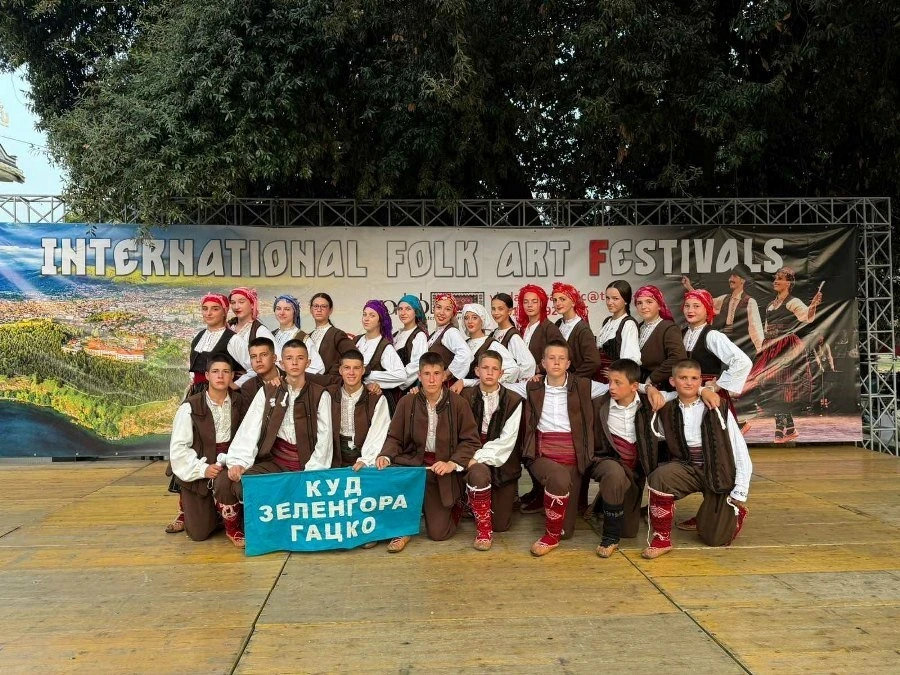
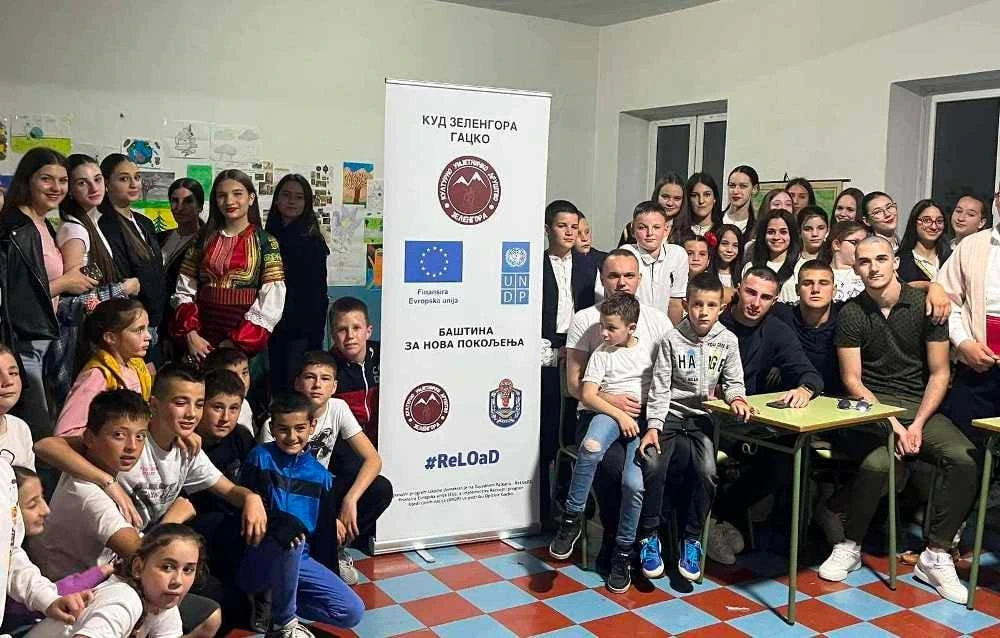
Four workshops took place in Brljevo on 5 June 2024: knitting and embroidery, wooden instrument-making, folk dance and traditional singing. They formed part of Zelengora’s Heritage for Future Generations project under ReLOaD2, funded by the European Union and implemented by UNDP with support from the Municipality of Gacko. Participants of different ages came together to help preserve and share the region’s cultural heritage.
Knitting and embroidery workshop
The workshop was led by educators Jelena Tepavčević and Nataša Todorović, and ten participants attended. Participants mastered the basic techniques of knitting socks and embroidering shirts, with great interest and dedication. This workshop enriched the students with new knowledge and skills, and paid special attention to transferring these skills to younger generations.
Wooden instrument-making workshop
Experienced craftsmen Jovan Jeremić and Miloš Dostinić led a workshop where dozens of boys participated. The participants mastered the basic steps in making wooden instruments and made several simple instruments themselves. The workshop enriched the participants with new experiences and knowledge, contributing to the preservation of cultural heritage.
School of Folklore
The Folklore School gathered over 60 participants of different ages. Experienced trainers Jelena Tepavčević, Luka Krstojević and Vasilije Rajković enabled the participants to master various folklore steps and techniques. The workshop was thoroughly designed and structured, providing a comprehensive and diverse experience.
Traditional singing workshop
The workshop was led by Jovana and Bojana Radmilović, and ten boys and ten girls participated. The participants mastered the old songs from the Gacko region, creating a unique atmosphere filled with tradition and togetherness. The workshop gave young people the opportunity to get acquainted with the richness of traditional music and built a sense of community and pride in preserving cultural heritage.
All four workshops were completed with positive impressions of the participants, who expressed their desire to continue learning and training. These activities represent a significant step in preserving and promoting our cultural heritage for future generations.